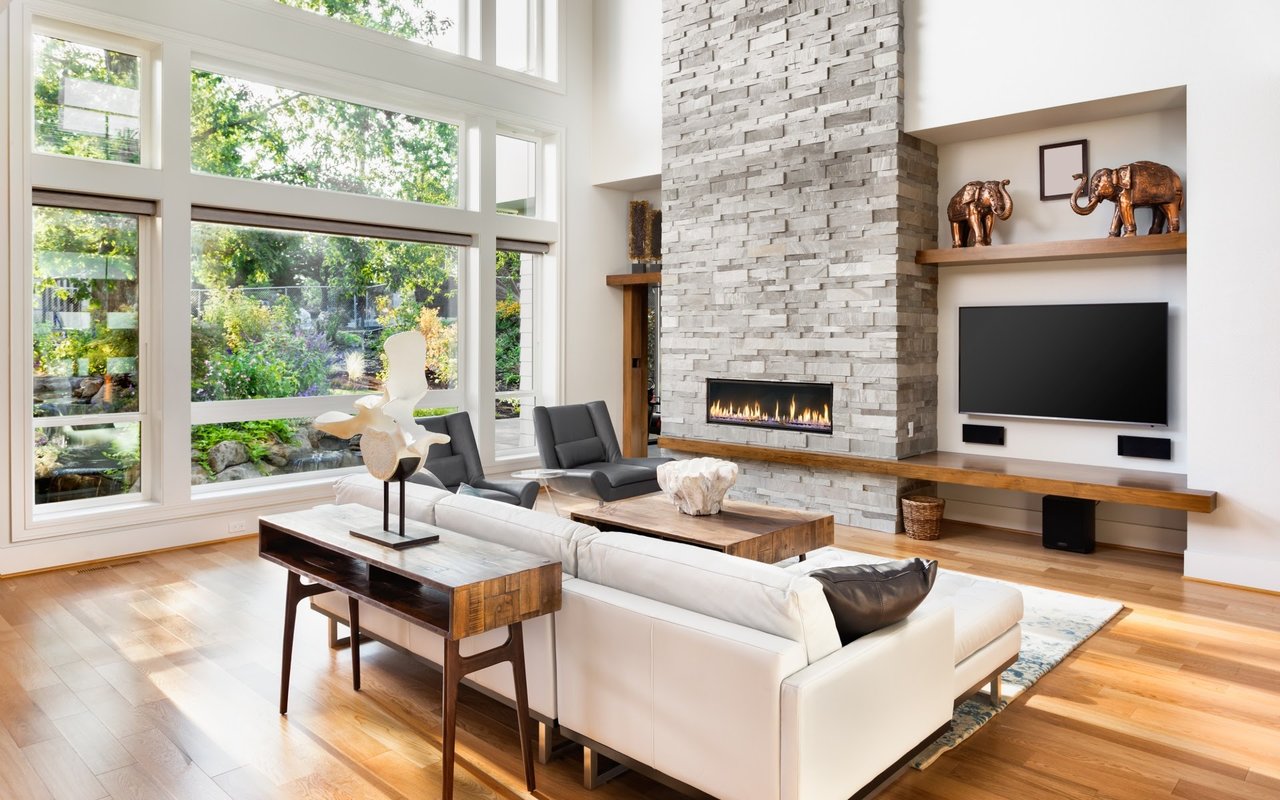
Every fall, someone writes an offer on a bungalow near the California Avenue corridor with a specific plan already in mind: replace the failing wood windows before the first hard freeze, maybe swap out a sagging porch column while they're at it. Their agent mentions, almost in passing, that the house sits in a historic district. The buyer hears that and assumes one of two things, either the city will block the work outright, or the phrase is decorative and changes nothing. Both assumptions can be wrong, and figuring out which one applies to a specific parcel is the actual homework that matters before that inspection contingency runs out.
Reno's Newlands Historic District, the roughly 170-acre stretch of Old Southwest bluffs above the Truckee River, was added to the National Register of Historic Places in 2016. It was only the city's second National Register listing, after the University of Nevada Reno Historic District went on in 1987. The nomination covers the period from 1889 through 1965, and of the properties inside its boundary, about 80 percent, or 469 homes, are classified as contributing to the district's historic character. Ten local architects and builders worked across the neighborhood, producing 19 distinct architectural styles, including work by Frederic DeLongchamps, one of the most prolific residential architects in Nevada's early twentieth century.
None of that recognition restricts what an owner can do to the house.
Two registers share a name and almost nothing else
The National Register listing is, by the state historic preservation office's own description, an honorary designation. It does not change property rights and it does not add restrictions for current or future owners who want to alter their property. A home can be one of the 469 contributing structures in the Newlands district and still have its owner replace the roof, repaint the trim, or tear out a porch without a single call to the city, at least not because of the National Register.
The restriction, when one exists, comes from somewhere else entirely: the City of Reno's own Register of Historic Places, a separate and much shorter list that the city maintains independently of the federal designation. The city's Historic Preservation program states it plainly on its own site: only a listing on the local register provides any actual protection against alteration or demolition, and the ordinance only applies to properties on that local register, not to every home inside a National Register boundary.
Here's how the two compare for a buyer trying to figure out what actually applies to a specific address:
| National Register of Historic Places | City of Reno Register of Historic Places | |
|---|---|---|
| What it recognizes | Historical and architectural significance | Individual properties the city has separately designated |
| Listed in Newlands since | 2016 | Varies by parcel, checked individually |
| Effect on exterior renovation | None | Certificate of Appropriateness required for substantial exterior work |
| Effect on demolition | None | Can be delayed up to 120 days for the city to explore alternatives |
| Effect on interior work | None | None, interior alterations are exempt either way |
The gap between these two columns is the whole story. A house can be a contributing property in a nationally recognized historic district and carry zero renovation oversight, because the National Register piece is symbolic. The only question that matters for a renovation timeline is whether that specific parcel also made it onto the city's separate, smaller list.
How to actually check before you close
This is not a question your title company will flag and it is not something every listing agent volunteers, since the National Register status is the more commonly cited fact and the more impressive-sounding one. Before the inspection period closes on a Newlands purchase, it's worth doing four things:
- Confirm the parcel's status on the City of Reno's historic resources map directly, rather than accepting that it sits inside the National Register boundary as proof of anything. The two lists are maintained separately and one does not imply the other.
- If the parcel is on the city register, ask whether a Certificate of Appropriateness has already been issued, applied for, or denied for any work the seller may have done or attempted.
- Sort planned work into interior versus exterior before you plan a budget or timeline. Interior alterations are exempt from the Certificate of Appropriateness process entirely, and so is ordinary maintenance or repair of an exterior feature that doesn't involve a substantial change in design, material, or appearance. A porch rebuilt to spec is a different animal than a porch replaced with something else.
- If the parcel is on the local register and the work is substantial, budget time, not just money. The approval process itself has a strong track record, with over 95 percent of Certificate of Appropriateness applications approved by the city's Historical Resources Commission, but a demolition on a city-listed property can be delayed for up to 120 days while the commission works through alternatives.
Asking about prior exterior work is a disclosure conversation worth having directly with a seller, not an assumption to skip.
What shows up in the inspection has nothing to do with either register
Separate from any historic designation question, homes built in the Newlands period of significance carry the systems you'd expect from a house that predates most modern code. Local inspectors working across Old Southwest and the broader Newlands footprint routinely flag outdated electrical panels, knob-and-tube wiring, and galvanized plumbing in homes of this era, none of which triggers a Certificate of Appropriateness since it's invisible from the curb, but all of which affects a lender's appraisal and a buyer's near-term repair list.
Sewer lines are the other recurring finding. Mature street trees throughout Old Southwest mean root intrusion is common, and clay pipe installed before 1980 tends to deteriorate on its own timeline regardless of what's growing above it. Reno's expansive clay soils add a third factor, bellied lines from ground settling. When replacement is needed, the range runs from about $3,000 to $25,000 depending on depth and accessibility, with partial repairs typically landing between $1,500 and $4,000. A sewer scope before closing costs a small fraction of that and either confirms the line is sound or gives a buyer real numbers to negotiate with, rather than a surprise six months in.
What the pricing data is actually saying
Zoom out to Reno's broader single-family market and July 2026 reads like a market that got pickier, not colder. The median sale price climbed to $715,000, up 13.1 percent from July 2025, according to Northern Nevada Regional MLS data. But the median time to go under contract stretched to 24 days that month, up from 11 days in June, even as inventory stayed roughly 25 percent below year-ago levels and sellers still walked away with about 99 percent of asking price. A longer runway to contract without any real inventory relief or price concession describes buyers taking more time to commit, not buyers losing interest.
Old Southwest carries its own, tighter version of that scarcity. As of June 2026, Reno/Sparks Association of Realtors and Northern Nevada Regional MLS data put roughly 45 active single-family listings across the neighborhood's two ZIP codes, with a median list price near $725,000 spanning updated bungalows near $500,000 up through Newlands Heights estates well past $1.5 million. Forty-five listings across an entire historic neighborhood isn't a market with much room to shop around, and it's exactly why the register question matters enough to resolve before closing rather than after. There is no deep bench of comparable homes to fall back on if a renovation plan stalls in front of the Historical Resources Commission.
Zoom into Newlands Heights specifically and an earlier snapshot from this year is worth reading carefully rather than at face value. In February 2026, the sub-district's median sale price stood at $867,000, up 18.9 percent from a year earlier, while its median price per square foot fell 13.2 percent over the same span. Those two figures moving in opposite directions aren't a contradiction, they're a composition shift: a run of larger, pricier homes closing that month pulled the median sale price up even as the more standardized price-per-square-foot figure, a better read on what any single square foot actually costs, came down. A buyer scanning price per square foot alone that month would have concluded the sub-district got cheaper. It didn't get cheaper. The mix of what sold changed.
A short FAQ
Does every home inside the Newlands Historic District boundary need a Certificate of Appropriateness for exterior work? No. Only properties separately listed on the City of Reno Register of Historic Places require one. Being inside the National Register boundary, even as a contributing property, does not by itself trigger the requirement.
Will a historic designation hurt resale value? The data doesn't support that concern. Newlands Heights posted a median sale price of $867,000 in February 2026, up 18.9 percent year over year, and Old Southwest's entire active inventory sat at only about 45 single-family listings as of June 2026, a level of scarcity that keeps demand steady regardless of what the rest of Reno's market is doing month to month.
What if a previous owner already did exterior work without checking? Ask directly during disclosure.
If you're weighing an offer inside the Newlands boundary and want someone to actually pull the parcel's register status before your contingency period runs out, that's the kind of local groundwork Reno/Tahoe Realty Group handles as a matter of course. Talk to a local real estate advisor before you assume either extreme about what a historic district will let you do.
This article is general information, not legal, tax or financial advice. Consult a qualified professional about your situation.